






Memorial
Julián Barón
KWY Ediciones
2017
Mijail Mitrovic
300
Cover with screen prints by Alex Ángeles
Archive: Grupo Yuyachkani
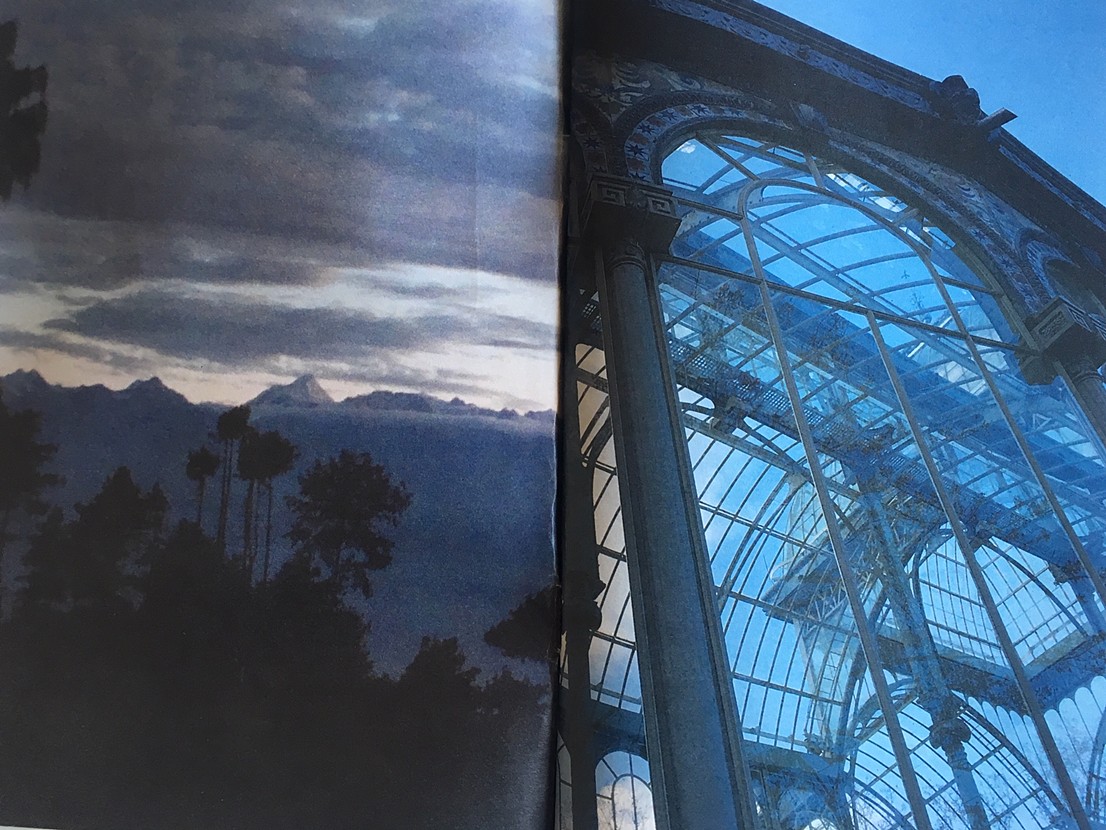
These images depict the encounter between Julián and the archive that the Yuyachkani theater group displays to the public at the entrance to Untitled, mixed media, a production that since 2004 has questioned the construction of national historical memory. The archive invites us to immerse ourselves in newspaper clippings, photographs, school books, artistic images, and other documents before entering the room where the stage action takes place. The entire production confronts the War of the Pacific (1873-1889) and the Internal Armed Conflict (1980-2000), two wars that define republican Peru and reveal the history of the country's fractures.
Memorial is a series of photocopies marked by the manual manipulation of each document. Scratches, decompositions, wrinkles, slips, glazes, grain degradation, fragments, inversions, double exposure. The title refers directly to the process of establishing certain things—events, characters, symbols—as what defines our shared history, but this series explores the relationship between images of war and the concrete forms that two very different kinds of social abstractions have taken on: national symbols and money. The former quickly lose their form, blurring the boundaries of the mental space where Peru has been represented throughout its history; the latter makes its entrance halfway through the exhibition—where Túpac Amaru measures his strength against the dollar—and then saturates the entire space.
“Money was invented so that people wouldn't have to look each other in the eye” (Godard, Film Socialisme), just as national symbols seek to ensure the permanence of the imagined community. In both cases, it is a function of ignorance, that is, of achieving, above and beyond what we see and perceive directly, an ideal space where all contradictions are resolved. The map—which here represents less the geographical reality than that representational space where we introduce fictions—and banknotes—as an everyday replacement for the map that puts those same fictions at our fingertips—teach us not to have to look at the breakdown of social ties that both wars have produced. Which, incidentally, is what the rest of the series deals with.
Between the national myth and its monetary form, images appear that define what we must ignore in order to sustain the fiction of a country without fractures. Many of the documents refer to our most recent war, pointing out that the establishment of official narratives and imagery, where heroes and villains are recognized as such, is a process that marks our present. It is a dispute that remains unresolved—and will probably never be completely resolved—but which, for many, is not really happening. However, at the center of the series, Fujimori and Abimael appear as two personifications of war, where they confront each other less as contradictions than as syntheses. Both, in the end, aimed to become the face of the nation, to be printed on bills that allow us not to look each other in the eye. The problem facing Memorial—as well as Yuyachkani's installation—is how to imagine a way out of the symbolic quagmire in which we find ourselves. A way out that overcomes these social forms of ignorance—emblems, money—and embraces the contradictions we share. Perhaps the only thing we truly share.
Mijail Mitrovic